Flat roofs look simple from ground level: a tidy line, a clean edge, often hidden behind a parapet. Up close, they demand respect. Water lingers, wind scours, gulls peck, moss creeps, and one careless footstep can open a seam you won’t notice until the next downpour. In Essex, where a week can swing from coastal gales to bright, drying sun, flat roofing rewards method and punishes shortcuts. I’ve seen jobs last three decades because someone made the right call on a Tuesday in March; I’ve also seen brand-new membranes blister by August because a basic step was skipped. The difference is almost always in the details.
This guide draws on what repeatedly goes wrong and what consistently works for flat roof repair in Essex. It isn’t a checklist to sell you a system. It’s the hard-learned judgment behind good decisions, whether you’re a homeowner calling a contractor or a facilities manager steering a maintenance program.
Why flat roofs fail sooner than they should
Flat roofs don’t shed water quickly, so the design banks on tight seams, sealed edges, sound upstands, and reliable drainage. A single weakness keeps water standing longer than intended and then every thermal cycle pries at that weakness. The usual culprits are predictable: poor detailing around penetrations, clogged outlets and gutters, membrane incompatibility, vapour trapped under patches, and foot traffic compressing insulation. Essex adds local flavour. Properties near the estuary see salt-laden winds that accelerate UV breakdown and lift loose laps; inland estates collect tree litter that clogs outlets; older terraces often marry new membranes to questionable substrates after loft conversions. Any one of those factors is manageable. Combine two or three and the repair plan needs to be sharper.
Start with diagnosis, not product
Most flat roof repairs in Essex go wrong before the first tin of primer is opened. People confuse symptoms with causes: a damp ceiling becomes “a leak above the hallway,” which becomes “recoat the area near the soil stack,” and six months later the stain returns. The stain was telling you the path water took, not the place it got in.
A good diagnosis uses time and context. When does it leak? During wind-driven rain from a particular quarter? After a thaw? Only after two days of steady drizzle? A split in a membrane might hold water out during a downpour but admit it when capillary action is steady and wind is low. Map the evidence: surface ponding patterns, drift lines of silt, algae crescents that show long-standing wet zones, stains on joists that point to the first entry point rather than the final drip.
I walk every roof I’m asked to assess at least twice. The first pass takes the big picture: the fall direction, outlet count, upstand heights, the condition of any parapets. The second pass checks details at hand and knee: terminations, laps, pipe penetrations, skylight kerbs, leadwork, and the bond of the existing membrane. On felt roofs in Essex housing stock, you often find patchwork histories: torch-on cap sheets over older pour-and-roll layers, with varying adhesion and a random assortment of mastics. If the top layer looks tired but intact, the story is below.
Compatibility and the risk of “solution-in-a-tin”
Hardware shops and trade counters across Essex stock liquid products promising easy fixes. Some are excellent when used correctly. Misapplied, they create expensive problems. Bitumen-based coatings can soften or distort EPDM. Solvented primers can curl single-ply laps. Silicone doesn’t bond to many acrylics without abrasion and the right tie-coat. I’ve lifted patches that looked tidy on the day but never truly adhered, so water tracked under them from week one.
Choosing a repair approach starts with what you’re bonding to. On felt (SBS or APP), torched patches are reliable if the substrate is dry and stable; cold-applied bituminous adhesives work when torching is unsafe, but require patience with cure times. On EPDM, use EPDM-specific primers and tapes, keep solvents away unless the manufacturer specifies, and watch the dew point. On GRP, sanding and cleaning are non-negotiable; top-coats won’t rescue a greasy surface. On PVC single-ply, check plasticiser migration and use the membrane manufacturer’s weld or adhesive system; generic mastics rarely survive a full year in the sun.
When I say “dry,” I mean dry to the material’s requirement, not “feels dry to the hand.” Timber at 18–20% moisture under a membrane will push vapour all summer. Trapped vapour blisters bitumen, debonds EPDM primers, and creates pinholes in liquid systems. If you can’t guarantee dryness, vent or strip back far enough to reach stable material. Anything less is a wager with bad odds.
Weather windows and the Essex forecast trap
Essex weather gives false confidence. A bright morning can hide a saturated deck; a stiff northeasterly clears showers but also drives cold air across fresh resin, stalling cure. I’ve rescheduled more repairs because of dew than rain. Cool, clear nights load moisture into every surface. If you arrive at 8 a.m. and patch over a dew-frosted felt, you trap water. By 2 p.m. the sun pushes that moisture up and the patch blisters.
Two rules serve well. First, begin adhesion work mid-morning after surfaces have warmed and vapour pressure is rising. Second, check temperature and dew point rather than air temperature alone. Most adhesives and resins have a minimum surface temperature margin above dew point, often three degrees. If you ignore that, the numbers will catch you.
Winds off the Thames rise in the afternoon. Torch-on repairs become risky on exposed roofs by lunchtime. Liquids skin faster, which tempts over-rolling and ends in weak films. Plan the day around the wind, not the clock.
Drainage and the arithmetic of ponding
I often hear that a bit of ponding is “normal for flat roofs.” That’s half-true. Modern membranes tolerate occasional standing water. What they don’t forgive is chronic ponding that concentrates UV heat and accelerates wear. Essex has plenty of roofs with barely perceptible falls that worked fine when outlets were clean. Add a thin layer of silt and the pond spreads.
A repair that ignores drainage solves nothing. If water lingers more than 48 hours in a shallow pan, either the outlet is restricted, the fall is insufficient, or the surface has settled. Pull the outlet grille. I’ve found pigeon bones, tennis balls, roofing nails, and moss mats that look like felt circles. When you clear it, note the debris type. Tree seeds and leaves suggest seasonal maintenance, not a one-off fix. Shingles of old felt point to upstream delamination.
Sometimes the smartest “repair” is the addition of a secondary scupper through a parapet at a controlled level. It won’t please the purist eye but it saves ceilings below. On larger commercial roofs in Chelmsford and Basildon, tapered insulation schemes pay for themselves by preventing years of minor leaks and the slow rot of decks. On small domestic roofs, a new drop-in sump and a local re-skim of a mineral cap sheet around it solves the same problem at human scale.
Edge details and upstands: where leaks grow
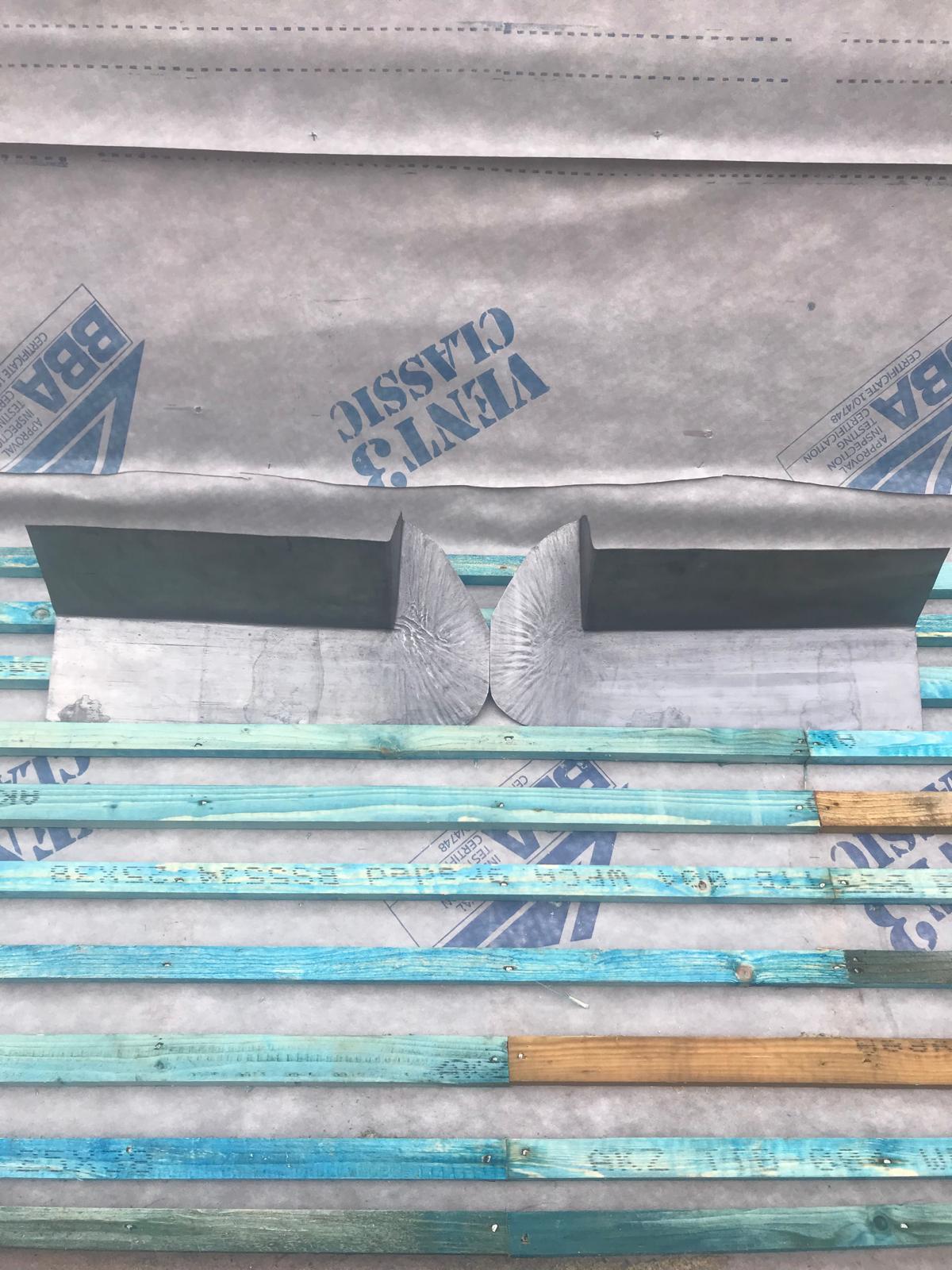
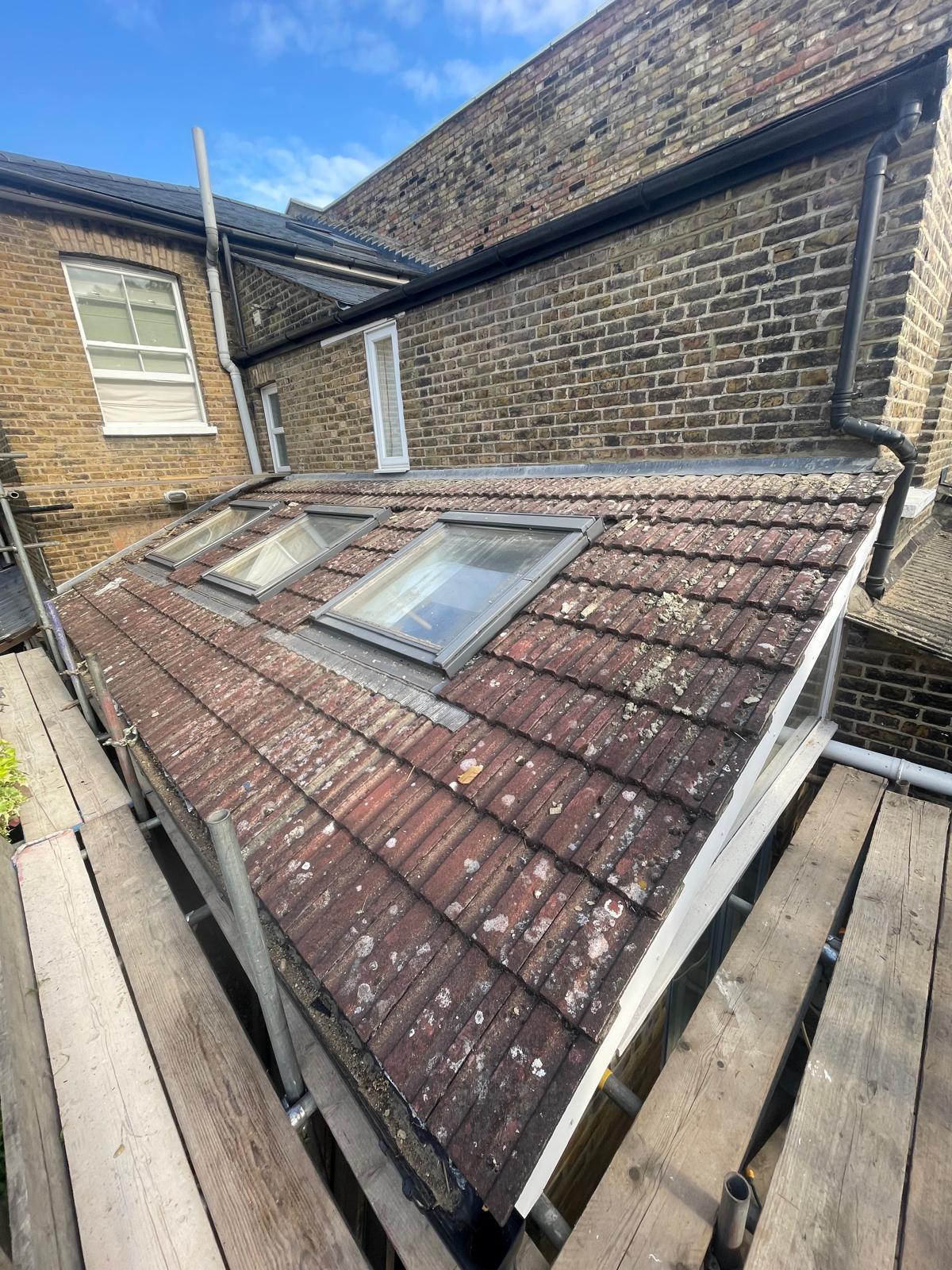
Most leaks I trace on flat roofs aren’t in the middle of the field. They start where the membrane meets something else. Essex homes favour lead flashings where flat roofs tie into brickwork or chimney stacks. Lead is excellent, but it needs a sound chase, proper wedges, and sealed joints. I’ve repaired countless “lead-flashed” interfaces where the lead was simply pressed against brick and held with mastic. The first freeze-thaw opens that joint.
Upstands at skylights and door thresholds demand height. The general rule of thumb is 150 flat roofing essex M.W Beal & Son Roofing Contractors mm above the finished roof surface. Builders squeeze that down to keep doors flush or lines neat, and a year later driving rain curls over the lip. You can sometimes recover by adding a curb adaptor or building up the upstand with compatible trims, but that’s a retrofit bandage. When replacing a roof, fight for the upstand height.
Parapet cappings crack, joints open, and water runs inside the wall to pop out under the membrane termination. That water gets blamed on the roof layer, but the source is the capping. I check parapet joints with a finger press and a small pry. If they move, seal or replace them before you blame the field sheet.
Foot traffic and the quiet damage of maintenance
The damage from one tradesperson dragging a ladder across a felt roof won’t always leak next week. It might start as a bruise that crushes insulation, creates a shallow dip, and becomes a pond. In Essex, where plenty of terraces host satellite dishes, solar installs, and boiler flues, roofs double as service decks. The subtle cure is design, not patching: designated walkways, sacrificial tiles, clear routes to plant, and training for anyone who accesses the roof.
For repairs, the trick is to look for compressed insulation, not just torn surfaces. A dip where boots land will take patch after patch unless you address the substrate. Lift a square, check the board integrity, replace localized insulation, reinstate the membrane with staggered laps, and then add a reinforced walkway to invite feet where the roof can take them.
When a patch makes sense, and when it doesn’t
Commercial reality matters. Not every roof wants a full overlay or replacement today. But a patch should be a bridge to a plan, not a habit that turns a roof into a quilt.
A local split along a felt lap that’s otherwise well-bonded is a good candidate for a torch-on repair. A brittle field sheet with alligatoring across a wide area is not. One or two popped blisters on a single-ply seam can be cleaned, primed, and sealed with the manufacturer’s tape system. A field of blisters tells you vapour or poor adhesion is widespread, and a patch will only shift the failure line. GRP pinholes around a skylight kerb can be abraded and re-laminated; widespread fiber bloom across panels suggests UV fatigue and resin starvation, and it’s time to discuss a full re-skin.
Cost-wise, homeowners often ask for rough numbers. For small flat roof repair Essex jobs, isolated torch-on patches might run in the low hundreds per visit, while targeted overlay sections with new trims and outlets can land in the high hundreds to a couple of thousand depending on access and size. Full overlays or replacements vary widely with material, insulation needs, and detailing. Don’t buy the lowest number blindly. Understand what each quote includes: primers, trims, outlets, vapour control, warranty terms, and method statements.
Materials that work in Essex conditions
I don’t treat “flat roofing Essex” as a single prescription, but local climate and building stock shape choices. Torch-on SBS felt remains a solid option for many domestic roofs because it tolerates minor standing water, handles foot traffic reasonably, and can be detailed neatly around awkward geometries. EPDM excels on larger, simple areas with minimal penetrations and offers clean, cold-applied installation. GRP suits complex shapes and small residential roofs when installers watch their catalysis and curing conditions. PVC and TPO single-ply dominate larger commercial structures with mechanically fixed or adhered systems.
For repairs, stick to the system you’re on unless you’re bridging to an upcoming replacement. Mixing materials introduces interfaces that weather differently. If you must hybridise, do it deliberately. A small EPDM curb atop a felt field can be reliable if it’s isolated with compatible trims and terminations, not smeared with general-purpose mastic.
Liquid-applied systems earn their keep on awkward, detailed roofs where flames are unwise and sheet goods would be a wrestling match. They demand prep, patience, and correct film thickness. I carry a wet-film gauge for that reason. Too thin and UV eats it; too thick and it skins, trapping solvent.
Moisture under the skin: the bit you can’t see
Damp timber smells a certain way when you lift a corner. If you’ve never smelled it, bring a moisture meter. Flat roofs fail from the deck up as often as from the top down. Condensation under poorly ventilated cold roofs is common in post-war Essex extensions. Warm roof overlays solve that structurally by moving the dew point above the deck, but a little patch won’t. If your repair involves regular leaks over winter, the insulation below might be damp. Replacing a square of sodden PIR isn’t glamorous, but it restores rigidity that adhesives need. If you skip this, your new patch flexes over a sponge and fails.
Ventilation strategies depend on construction. Cold roofs want cross-ventilation at eaves and through proprietary vents; warm roofs want airtightness below and perhaps pressure-relief vents above. I’ve had good results with vapour pressure vents on bituminous overlays where full dry-out wasn’t feasible before winter, buying time while moisture diffuses. They’re not magic, but on the right roof they reduce blistering sharply.
The contractor question: what to ask before you sign
The flat roof trade includes great craftspeople and the odd van that changes names every spring. A homeowner trying to choose among quotes doesn’t have x-ray vision. A few focused questions cut noise and surface competence fast.
- Which exact materials and primers are you using, and why for this roof? Ask for datasheets. A pro explains compatibility and cure windows without bluffing. How will you handle moisture in the substrate if you find it? You want a plan that includes test cuts or moisture readings and a decision tree, not “we’ll see.” What’s your approach to details: outlets, upstands, terminations into masonry, and any parapet cappings? Vague answers on these points predict callbacks. When during the day do you plan to carry out adhesion work? Look for awareness of dew point and wind, not just “weather permitting.” What are the limitations of your warranty? A realistic warranty states what’s covered and what voids it, and ties to manufacturer approvals when relevant.
You won’t need all five answers for a tiny patch, but even small jobs benefit from clarity. And if a contractor uses the phrase “universal sealer” three times, dig deeper.
Case notes from around Essex
A two-bed terrace in Southend developed a persistent leak above the stairwell each spring. Four patches later, the stain kept migrating. The tell was a faint algae crescent along a parapet line, and a crumbly mortar bed under the capping. Water was running inside the wall, not through the felt. Re-pointing the capping joints and installing a simple through-parapet scupper at the low corner ended the saga. The roof membrane never needed replacement; it needed perimeter respect.
In Chelmsford, a school’s prefab cloakroom block with a felt roof leaked after every heavy wind. We found foot traffic marks from HVAC service routes crossing a long span with thin insulation. Compressing the board made a shallow swale; ponding followed. The repair involved local insulation replacement, new torch-on cap sheet patches with generous laps, and the installation of reinforced walkway tiles guiding trades from ladder to plant. The leaks stopped, because we fixed the path of feet more than the path of water.
A bungalow in Billericay had an EPDM roof under trees. The owners tried an acrylic “protection coat” recommended by a well-meaning neighbour. The acrylic never bonded to the EPDM, collected grime, and lifted in sheets. We cleaned the EPDM with manufacturer cleaner, repaired three minor seam defects with primer and tape, scraped back moss around the outlet, and installed a larger leaf guard. The roof didn’t need a new layer; it needed a return to the correct system and a maintenance habit.
Maintenance that actually matters
Maintenance is the unglamorous part of flat roofing Essex residents tend to delay until the first brown circle appears on the ceiling. A smart maintenance routine takes an hour twice a year and saves thousands.
- Clear outlets and gutters at the end of autumn and late spring. Don’t just remove leaves; rinse silt that settles like flour and gradually dams water. Photograph the roof after you clean it. The next visit, compare. Slow changes in ponding or new silt trails tell you where to look before leaks develop. Keep overhanging branches cut back. Shade slows drying and feeds moss; falling twigs puncture mineral caps. Limit access. If different trades use the roof, give them a route and mats. Wandering feet cost money. Note small changes around details: sealant shrinkage at lead chases, cracks in GRP at corners, loose trims. These are early warnings, not decorations.
Maintenance also means acknowledging material lifespans. A well-installed torch-on felt system often runs 20–25 years. EPDM can go longer, but edge terminations age. If your roof is 18 years old and needs annual patches, plan an overlay rather than drip-feeding repairs.
Planning a repair: a simple, robust sequence
The best repairs share a rhythm: investigate, prepare, execute, verify. Keep it simple, but don’t skip beats.
- Investigate beyond the wet spot. Trace water paths, inspect perimeters, and lift a controlled test patch if needed to assess moisture below. Prepare the surface with purpose. Clean, dry, abrade where appropriate, prime correctly, and cut patches with rounded corners and sufficient lap widths. Execute within the weather window. Mind dew point, wind, and cure times. Don’t rush edges; details are the job. Verify your work. Water test when feasible, check adhesion after initial cure, and document with photos.
That’s the whole craft in four lines. Only the patience varies.
When to stop repairing and replace or overlay
Some roofs reach a tipping point where every new patch destabilizes the next seam. Clues include widespread blistering, alligatoring across the field, substrate softness underfoot, and repeated leaks from different locations despite competent repairs. If the deck is sound and the insulation value is poor, a warm-roof overlay is an opportunity: increase energy performance, reset falls with tapered boards where needed, and bring upstands to proper height. If the deck is compromised, particularly on older timber extensions, stripping to joists and rebuilding is safer than trying to rescue layers that hide rot.
Money drives decisions, but so does timing. Planning an overlay in late spring gives you long, forgiving curing windows and fewer weather traps. Trying to squeeze a major job in late autumn is possible, but the margin for error narrows. Align your budget with the calendar when you can.
Local realities: access, permissions, and neighbours
Essex terraces often mean access across neighbouring roofs or through rear alleys. Agree routes ahead of time, protect surfaces you cross, and plan waste removal so skip locations don’t block residents. If the building is leasehold, check whether the freeholder needs notice; service charges sometimes cover shared roofs in surprising ways. In conservation areas, visible parapet changes or new outlets through facades might require a conversation with the council. None of this is complicated, but last-minute surprises cost days and goodwill.
Noise matters too. Torch work and grinders near bedrooms at 8 a.m. make enemies. Good flat roofers coordinate with occupants and work details that create the bulk of noise in a tidy block rather than in dribs and drabs.
A note on warranties and paperwork
Paper doesn’t stop water, but it does keep you honest. Manufacturer-backed warranties usually require photos at stages, adherence to specific primers and tapes, and weather records on the day. For flat roof repair Essex jobs that are small, you may get only a contractor warranty. That’s fine, provided it spells out duration, coverage limits, and maintenance responsibilities. Keep your invoice, the product batch numbers if available, and a simple log of any maintenance you perform. If you ever sell the property, that folder reassures buyers more than any sales pitch.
The payoff: a roof you can stop thinking about
A flat roof shouldn’t become a hobby. The payoff for careful diagnosis, compatible materials, respect for weather, and clean details is quiet. No buckets by the back door when the wind turns east. No febrile calls to roofers after a Tuesday storm. Just a surface doing its job out of sight and out of mind.
Flat roofing is more about tradecraft than heroics. Essex gives us sunshine enough to cure resin right, winds that keep us humble, and a building stock that rewards the patient. Avoid the common mistakes — misdiagnosis, material mismatch, weather blindness, lazy details, and neglect — and your repairs will look unremarkable from the pavement. That’s the compliment a flat roof deserves.